X777 Ships Its Own Backup Domains: What That Tells You
The X777 landing page is tiny, a few script tags and almost nothing else. Tucked inside it's one line worth reading properly: a configuration block listing three other web addresses, all siblings of the one you're on. The operator has written its own replacements into the page. That's not a mistake and it's not hidden, and once you understand why it is there, it changes how you should handle the link somebody sent you.
What is actually in the page
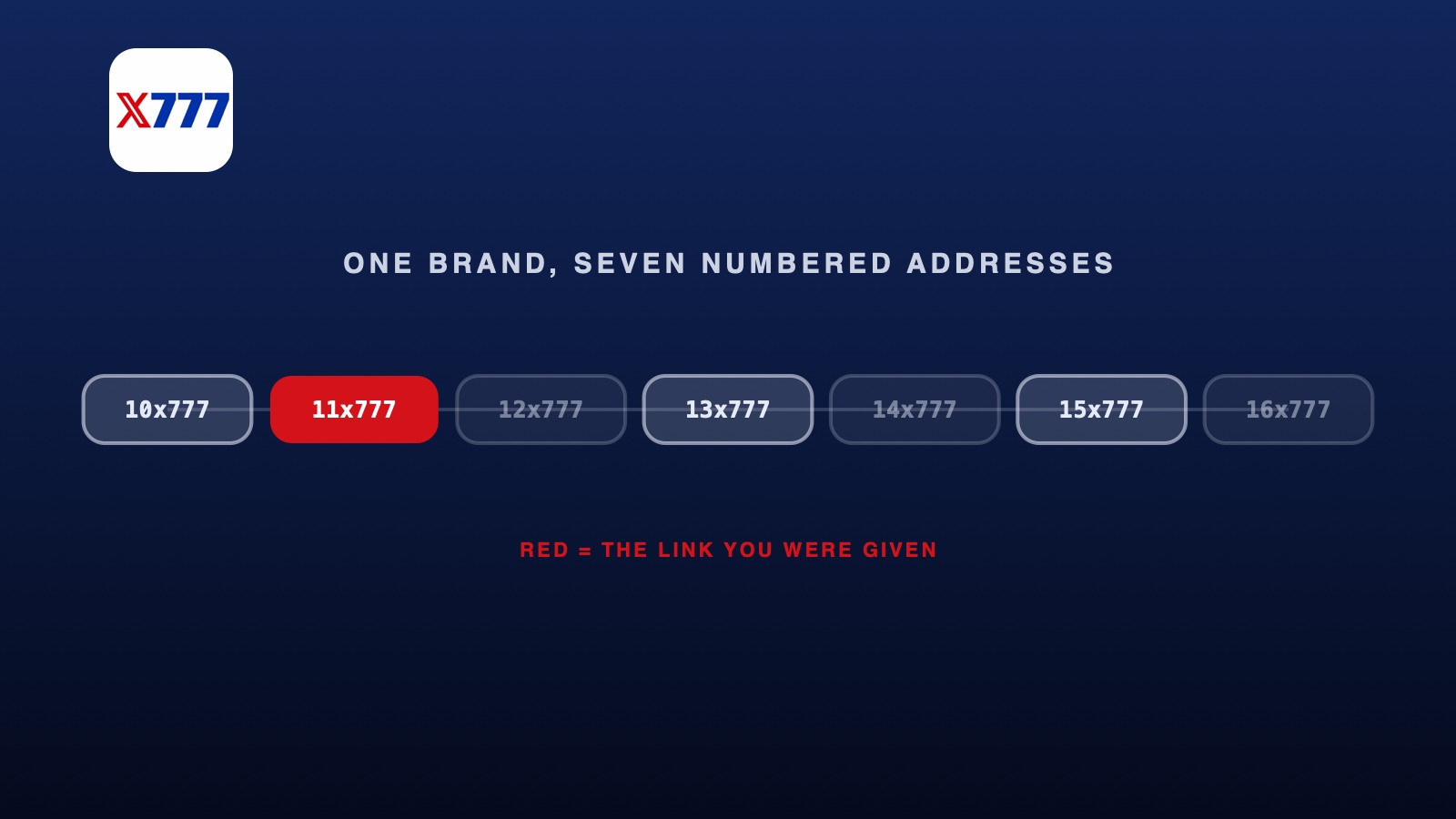
The address we were given is 11x777.com. Its page carries a small block naming 10x777.com, 13x777.com and 15x777.com. We checked the wider run and every number from 10 through 16 answered, so the family is larger than the three the page mentions. Not all of them behave identically either: the address we were handed acts as a lightweight entry point, while its siblings load the full lobby. This is infrastructure, not marketing; it exists so a browser has somewhere to go when the current address stops resolving.
- 11x777.com names 10x777, 13x777 and 15x777 as alternates
- The whole 10–16 run resolves and answers
- Not every address in the run serves the same page
- The list is plumbing, published in the page rather than advertised
Why an operator plans for its own disappearance
Domains in this sector are unstable by default. Registrars suspend them after complaints, networks block them, payment partners object to them, and some simply lapse. An operator running a real-money platform cannot have its customers permanently locked out because one name went dark, so the pragmatic answer is to keep several running and tell the software about them. Read plainly, a hardcoded fallback list says: we expect this address to stop working, and we have arranged for it. That's candid about the environment, and it's a fair thing to know before you keep a balance there.
The risk this creates for you
A predictable pattern is a gift to anyone who wants to impersonate the brand. If addresses run in an obvious numbered series, registering another number in the same family is cheap and produces something that looks entirely plausible to a person recalling a name half-remembered from a message. There is no clue in the name itself to separate a genuine sibling from a copy. And because we found that different numbers in this run don't all serve the same page, even an address that loads is not proof you have arrived where you intended.
- Numbered families are trivially imitable
- The name alone cannot tell a real sibling from a lookalike
- An address that loads isn't proof it is the operator's
- The pattern that helps the operator also helps anyone copying it
So never guess the next number
This is the practical rule and it's worth stating bluntly. If your usual address stops loading, do not increment the number and see what happens. Use the alternates named inside the page you already trust, or a link you saved earlier from a session that worked. Guessing feels harmless because the pattern is so obvious, and that obviousness is precisely the problem. Everybody can see it, including people who aren't the operator.
Save the link the day it works
Bookmark the working address, with the date, the first time you successfully use it. This costs ten seconds and removes the entire category of problem, because you never again have to reason about which of several similar names is genuine. It matters more here than almost anywhere else in this catalogue: with a single-domain operator you can at least search for the brand and compare, but with a numbered family a search will surface several plausible candidates and no way to rank them.
A page that asks to be indexed and says nothing
There's an oddity worth noting. The page instructs search engines to index and follow it, yet carries no title element at all — nothing for a browser tab or a search result to display — and declares a web app manifest without pointing it anywhere. A platform that wants to be found has published nothing to be found by. It's a small thing, but it fits the pattern: the engineering effort here has gone into staying reachable rather than into being understood.
What the wordmark tells you, which is nothing
X777's logo is a flat two-colour wordmark: a red X, three blue sevens, no cards, no reels, no crown, no coins. Compared with most branding in this category it is almost austere. The only content signal available is the 777 itself, which is longstanding shorthand for slots, and that's the basis on which we've catalogued it: an inference, not a claim by the operator. Everything real about the lobby is behind a registration form.
The question the domains do not answer
Staying reachable is not the same as being worth reaching. A well-maintained fallback system tells you the operator intends to keep serving customers through disruption, which is genuinely more than nothing. It tells you nothing about payout rates, none of which are published, about who runs the platform, which isn't disclosed, or about whether a withdrawal completes. Decide your limit before you register, keep it whatever the first session does, and our responsible gaming page is there if that becomes difficult.
Key Takeaway
The backup list in the X777 page is the most informative thing the operator publishes, and it wasn't written for you to read. It says the address will probably change, and it names where to go when it does. Take the useful half; bookmark the link that worked, and use the alternates named in the page rather than guessing the next number, because a pattern this obvious is as easy for a stranger to copy as it's for you to remember. Then judge the platform on whether it pays, which is a question no amount of domain engineering will answer.